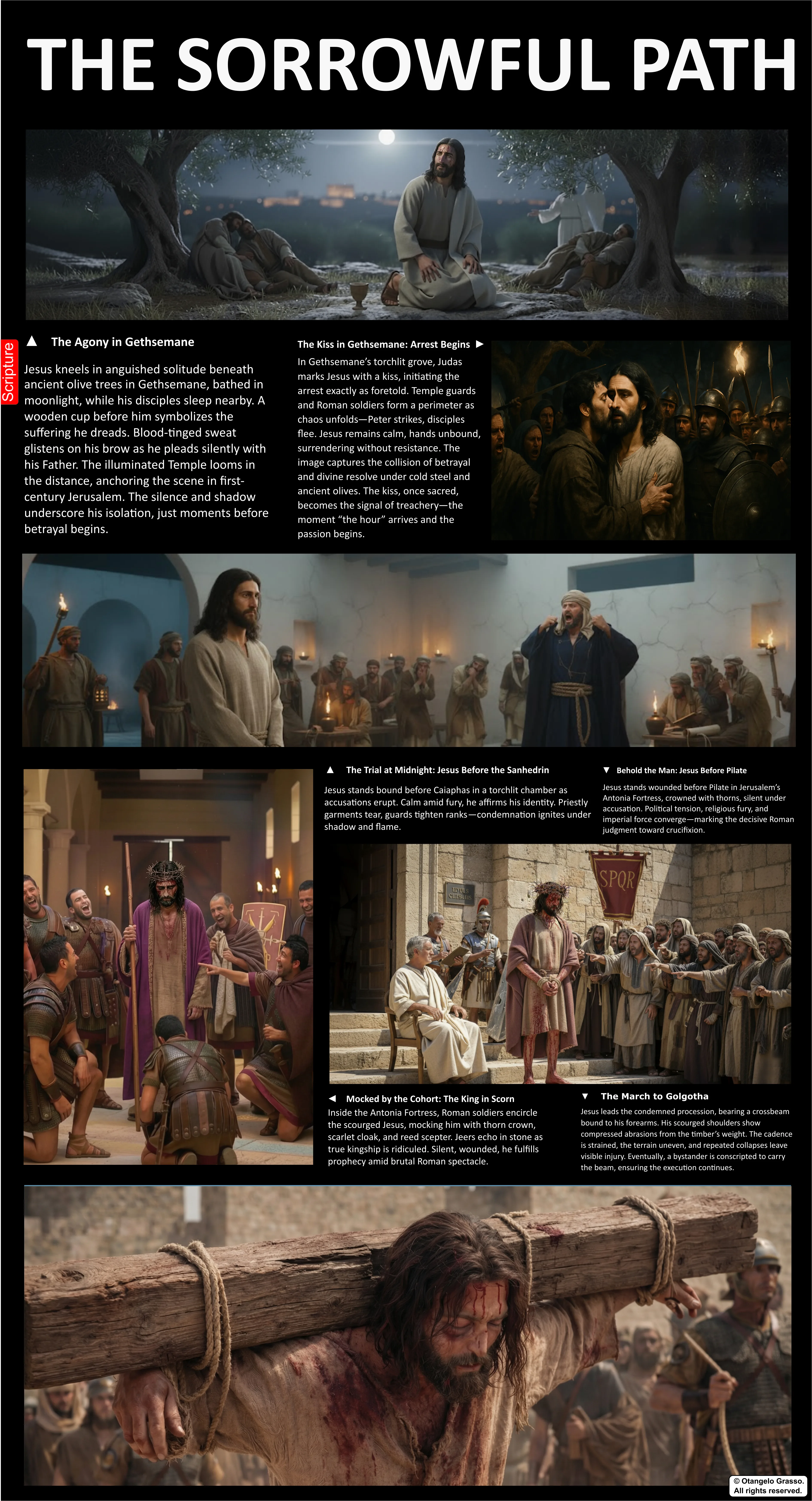
IN-DEPTH READING
A journey narrated, not mapped
The phrase “from Gethsemane to Golgotha” compresses a series of events into one line: a nighttime arrest east of Jerusalem, questioning and hearings, a Roman judgment, and an execution outside the city. The four canonical Gospels tell this story in related but non-identical forms. They name some people and places, but do not provide a modern itinerary, a clock-by-clock chronology, a measured distance, or a street map.1
This distinction matters because later Christian memory turned the journey into a devotional route, while modern writers have tried to reconstruct a plausible first-century route from textual clues and Jerusalem’s changing topography. Both are meaningful projects, but neither should be mistaken for a surviving eyewitness map. The responsible historical task is to separate what the texts state, what archaeology makes plausible, and what remains conjecture.
The author’s proposed reconstruction in From the Praetorium to Golgotha is a useful hypothesis to test against those limits. It argues for a praetorium associated with Herod’s former western palace and a possible movement toward the Gennath Gate and a quarry zone. The essay itself acknowledges that the precise tribunal, gate, turns and handover point cannot be recovered with certainty.2 This chapter examines that proposal alongside alternative scholarship rather than treating one route as established fact.
Four narratives, different emphases
Each Gospel arranges and interprets the Passion in its own way. Mark and Matthew place the Gethsemane arrest, the high-priestly proceedings, Peter’s denial, the morning appearance before Pilate, the scourging and mockery, Simon of Cyrene, and the execution in a continuous narrative. Luke shares much of this sequence but alone reports that Pilate sent Jesus to Herod Antipas. John gives a distinct arrangement of the interrogations and emphasizes Jesus carrying the cross. These differences are important evidence about each evangelist’s account; they are not a license to combine every detail into a precise timetable.1
| Episode | What the texts report | What they do not establish |
|---|---|---|
| Arrest | Jesus is arrested at a garden or place called Gethsemane, on or near the Mount of Olives, after Judas identifies him (Matt. 26:36–56; Mark 14:32–52; Luke 22:39–53; John 18:1–12). | The garden’s exact boundary, the arrest hour, and the route taken into the city. |
| Jewish authorities | The Synoptics describe proceedings involving the high priest and council; John narrates questioning before Annas and then Caiaphas in a different sequence (Matt. 26:57–68; Mark 14:53–65; Luke 22:54, 66–71; John 18:12–27). | A complete court transcript, the exact locations of every hearing, or a reliably timed sequence. |
| Pilate | All four Gospels present Jesus before the Roman prefect Pontius Pilate (Matt. 27:1–26; Mark 15:1–15; Luke 23:1–25; John 18:28–19:16). | The building or precise spot where the hearing occurred. “Praetorium” can refer to the governor’s headquarters or residence, but the Gospel narratives do not identify it by a securely locatable street address. |
| Journey and execution | John says Jesus went out carrying the cross; Matthew, Mark and Luke say Simon of Cyrene was compelled to carry it (John 19:17; Matt. 27:32; Mark 15:21; Luke 23:26). | The exact object carried, where Simon took over, the road, distance, duration, number of falls, or traditional stations. |
The familiar sequence can be used as a broad narrative framework. Individual details, however, must remain attached to the Gospel that reports them. For example, only Luke includes the referral to Herod; only John records the dialogue about Jesus’ kingdom in the form given in John 18; and the Gospels differ over when the scourging occurred. Chapter 8 treats the scourging in detail, so the present chapter focuses on the geography and limits of reconstructing the journey.1
Gethsemane, arrest and the night hearings
Mark and Matthew call the place Gethsemane; Luke describes Jesus going to the Mount of Olives; John identifies a garden across the Kidron Valley. Together these accounts locate the opening episode east of the city, but they do not let us identify the garden’s ancient perimeter or plot a precise route from it. Today’s traditional Garden of Gethsemane is a site of Christian memory, not a surveyed first-century arrest scene.1
Luke 22:43–44, which describes an angel strengthening Jesus and sweat “like drops of blood,” has a significant textual history. The verses are absent from several early Greek witnesses and present in others; modern editions and translations signal the variant in different ways. The passage should therefore be discussed as a disputed reading in Luke’s transmission, not used as an uncontested medical report. Even if read devotionally or as part of the received text, it does not establish a clinical diagnosis of hematidrosis or document a specific skin injury.3
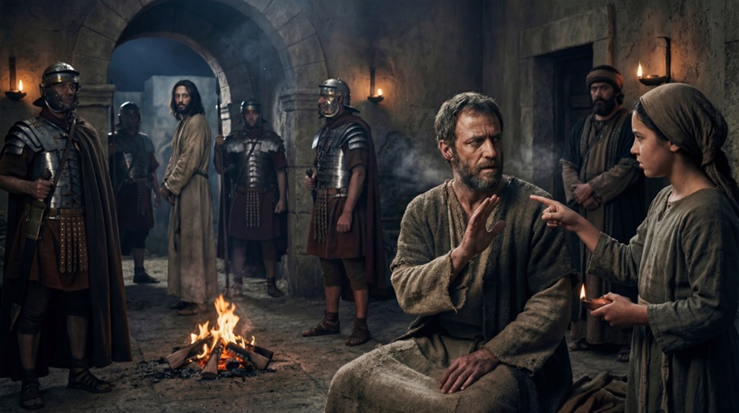
The arrest narratives mention a disciple’s sword and the wounding of a servant; John names the servant Malchus, while the Synoptics do not. Jesus is then taken to the authorities. The narratives offer theological and legal interpretations of the proceedings, but not a minute-by-minute record. Exact times such as “11:00 p.m.,” “1:00 a.m.,” or “5:00 a.m.” in modern retellings are reconstructions, not times stated by the Gospels.
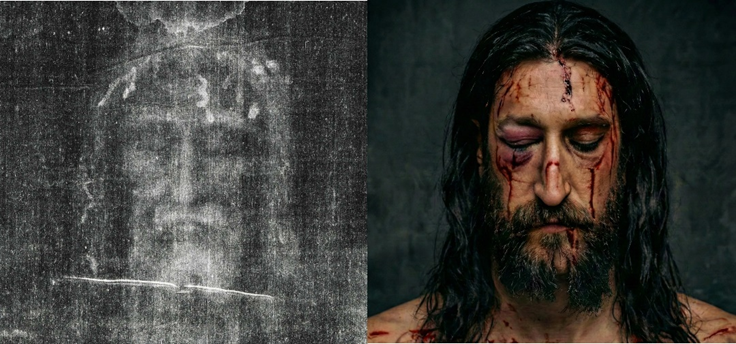
Matthew, Mark and Luke describe mockery and physical abuse by those guarding Jesus; John describes a slap during questioning before Annas. The accounts do not identify every assailant, enumerate blows, or supply the clinical observations required to diagnose the resulting injuries. A Shroud-based identification of particular facial marks with particular Gospel episodes is an interpretation, and the cloth cannot independently tell us who struck whom, where, or in what order.4
Pilate, Jerusalem and the praetorium question
Pontius Pilate was prefect of Judaea from AD 26 to 36. The Gospels present him as the Roman authority who orders Jesus’ crucifixion, but they do not name the building where he heard the case. Herod the Great’s former western palace is a strong candidate for the governor’s Jerusalem headquarters; the Antonia Fortress and other public settings remain part of the discussion. The evidence identifies no room, gate or pavement as the trial site, so “the western palace was the true Praetorium” goes beyond what archaeology can prove.5
There is good literary reason to take the western palace seriously. Philo places Pilate’s dispute over gilded shields at Herod’s palace in Jerusalem. Josephus describes a grand compound with varied rooms and uses, colonnades, baths and broad courtyards; in his account of the events of AD 66, the governor Florus occupies the palace and sets his tribunal before it. These texts support the palace’s use for Roman administration and public proceedings, but neither says that Jesus stood there. Josephus gives no plan that would verify the circular pool, symmetrical gardens or precise building arrangement shown in the reconstructions below.6
The archaeological picture is less complete than a photorealistic reconstruction can make it seem. Excavations beneath the Kishle and the Tower of David Museum have exposed remains associated with the western palace, including substantial walls and drainage infrastructure. Yet only a small and altered part of the ancient complex survives. A reconstruction of the compound’s gardens, pools, gateways and audience spaces necessarily draws on Josephus and comparison with other Herodian palaces; it is not a literal image of excavated first-century rooms. Recent scholarship stresses how scant the remains are and how much any architectural plan must infer.1318
Shimon Gibson has argued that a western gateway, paved forecourt and adjacent raised feature could fit John’s account of Pilate bringing Jesus outside to a place called the “Stone Pavement,” or Lithostroton, and Gabbatha. This is a specific archaeological interpretation of a plausible setting, not an inscription or a find that names Pilate or Jesus. The familiar pavement beneath the Convent of Ecce Homo is generally dated to the Hadrianic rebuilding of the second century CE and cannot by itself establish a first-century trial location. A 2026 Israel Antiquities Authority study describes a separate stepped podium beside Jerusalem’s eastern Stepped Street as possible public street furniture that may have served for trials or announcements; it does not identify the podium with Jesus’ hearing. The evidence leaves more than one possible public setting in play.517
Behold the Man: visual reconstructions of a possible setting
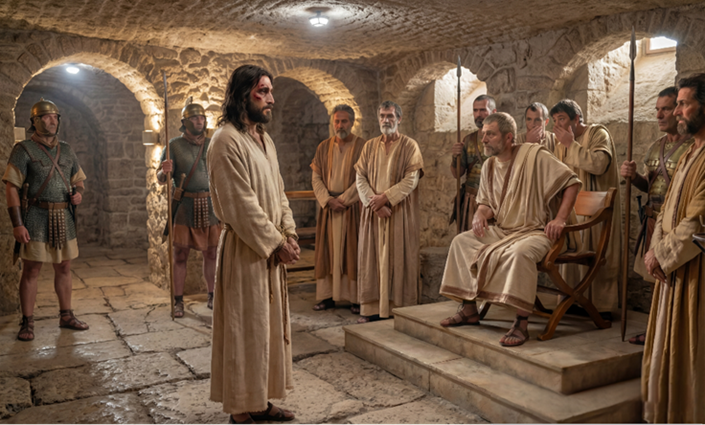
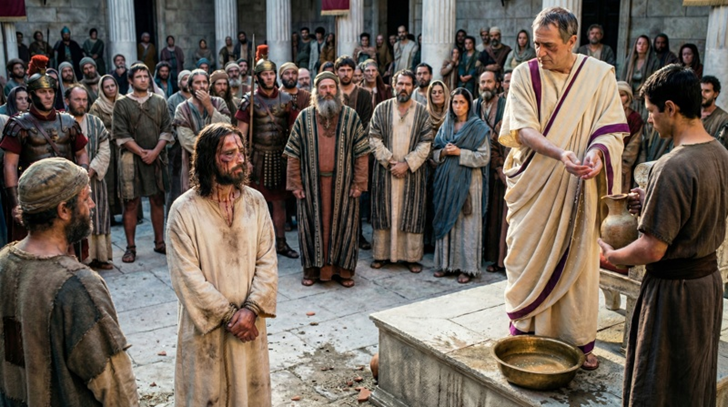
The four images below are illustrative reconstructions supplied for this article. They help readers imagine the scale and drama of a palace setting, but their detailed courtyards, stairs, colonnades, pool and crowd are artistic choices. They do not document the actual tribunal, prove that the trial occurred at this compound, or show an excavated arrangement. The Kishle remains can be visited through the Tower of David Jerusalem Museum; the museum describes current access and tours on its visitor pages.18
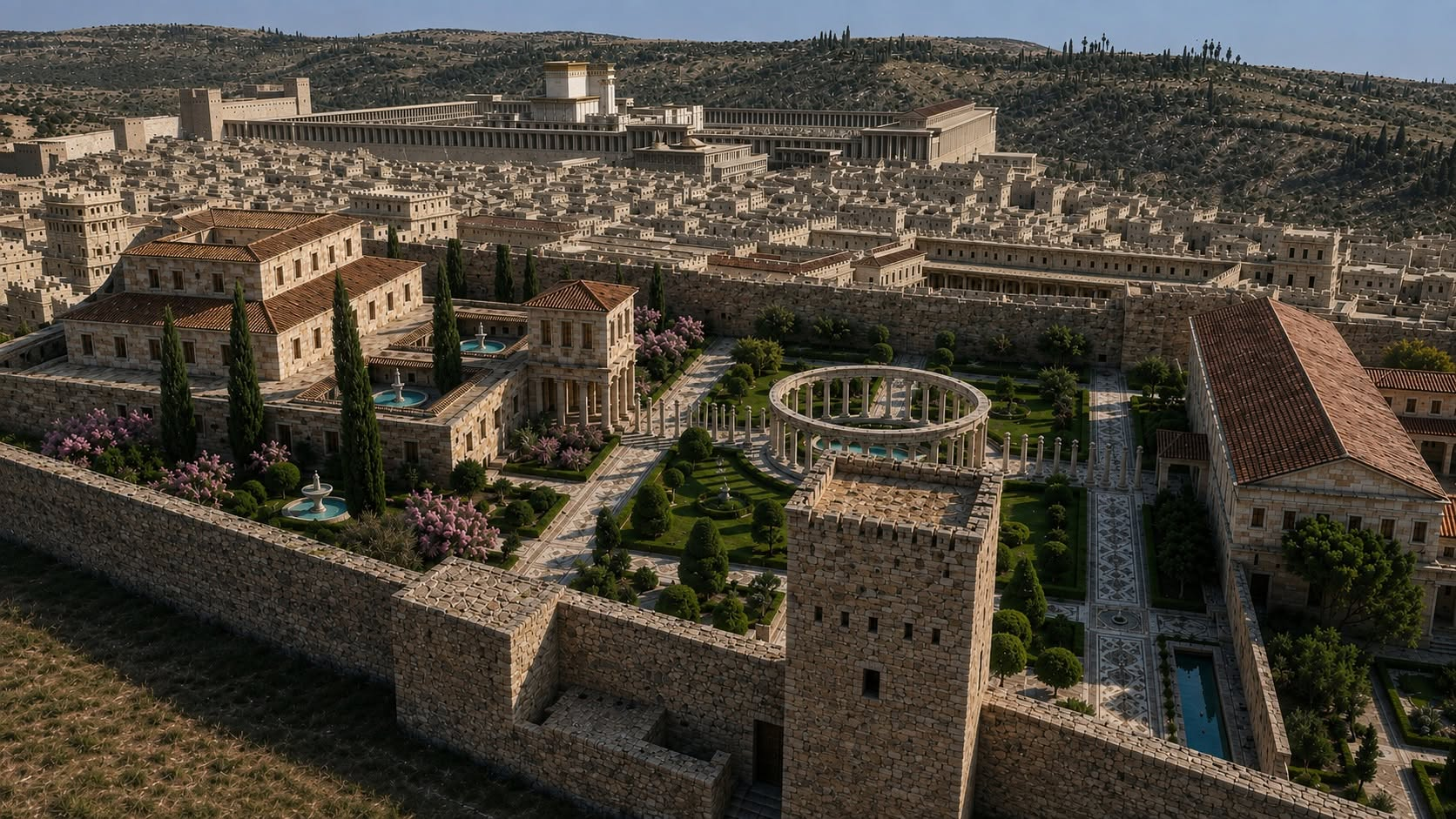
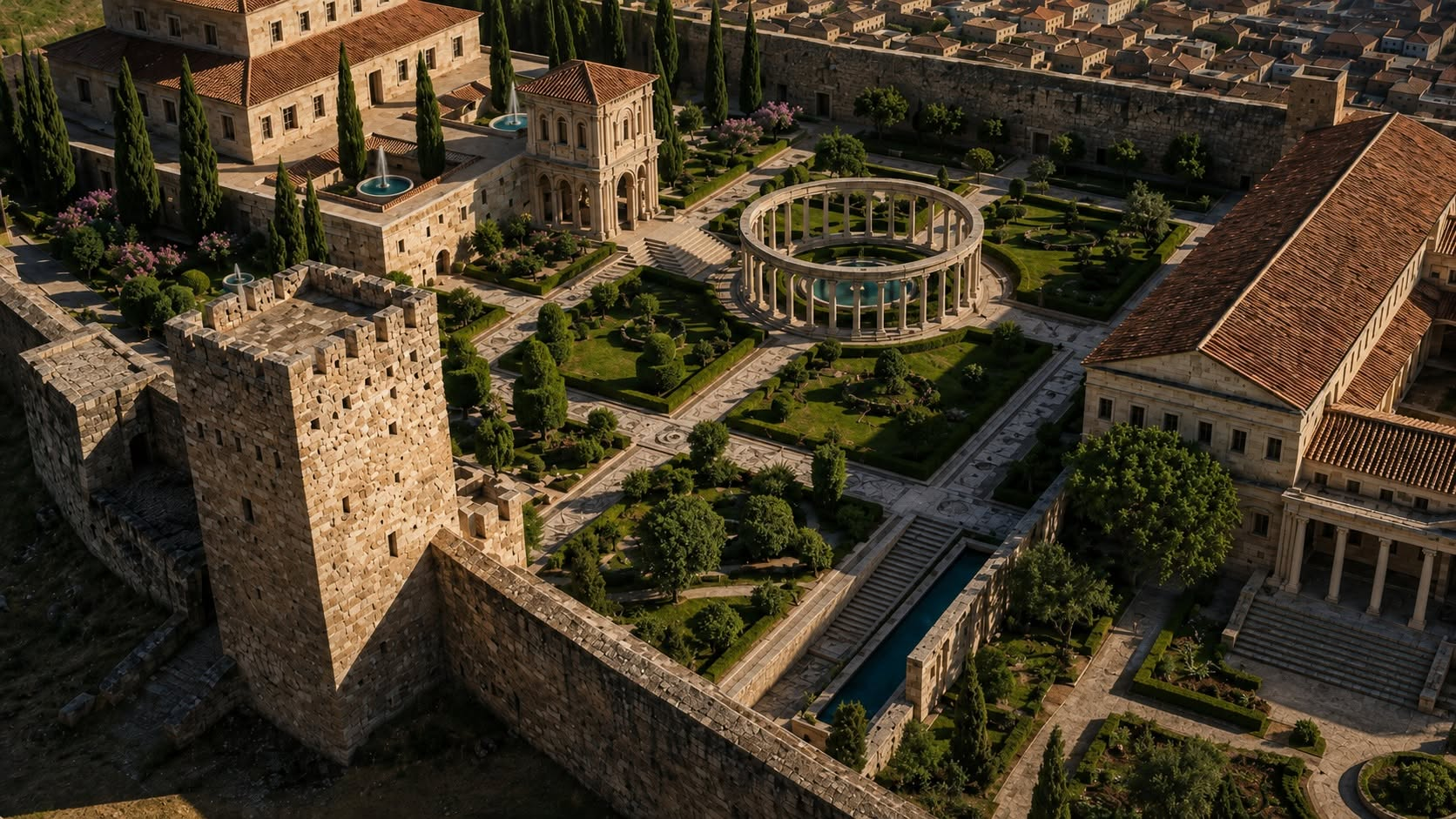
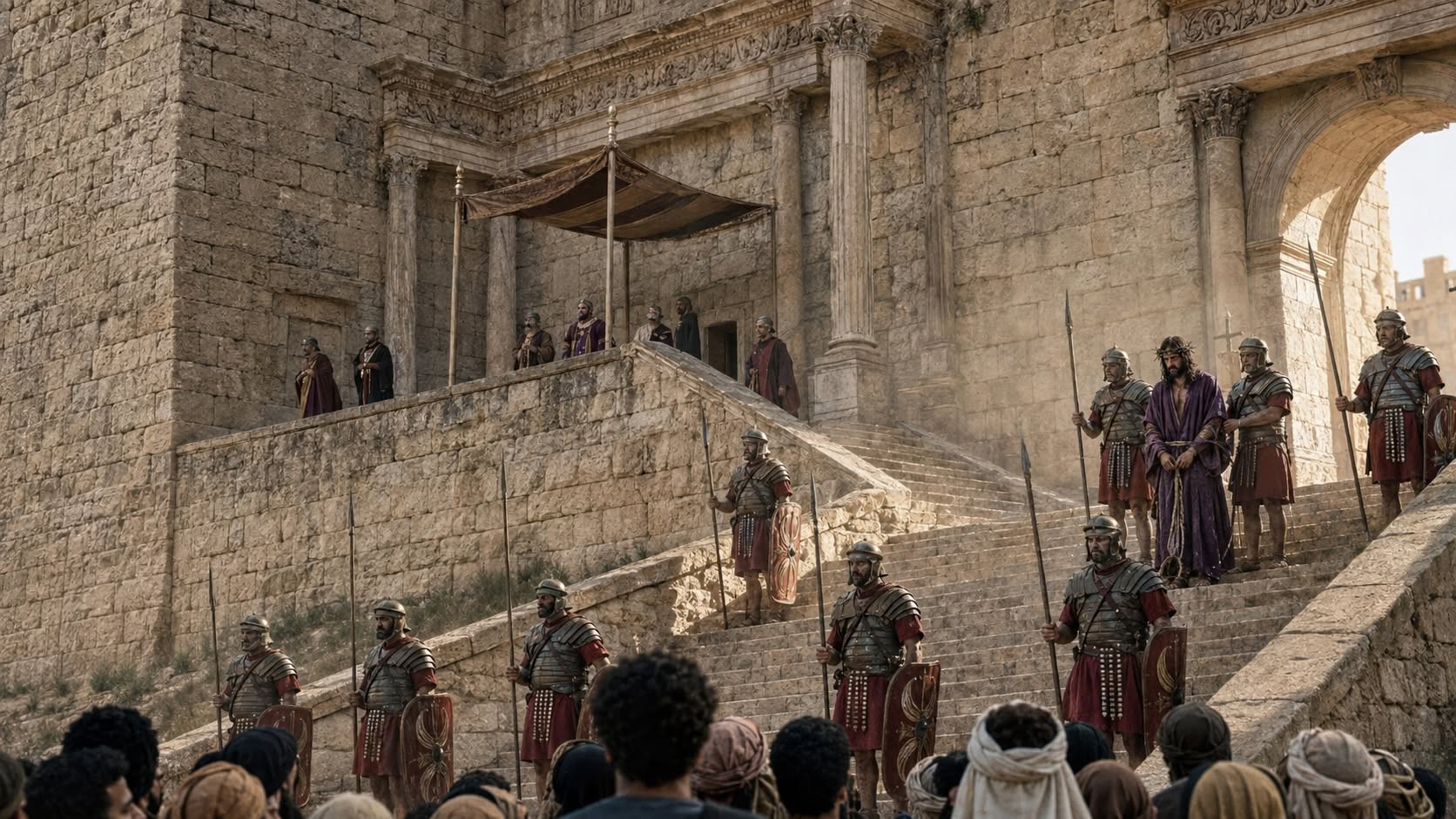
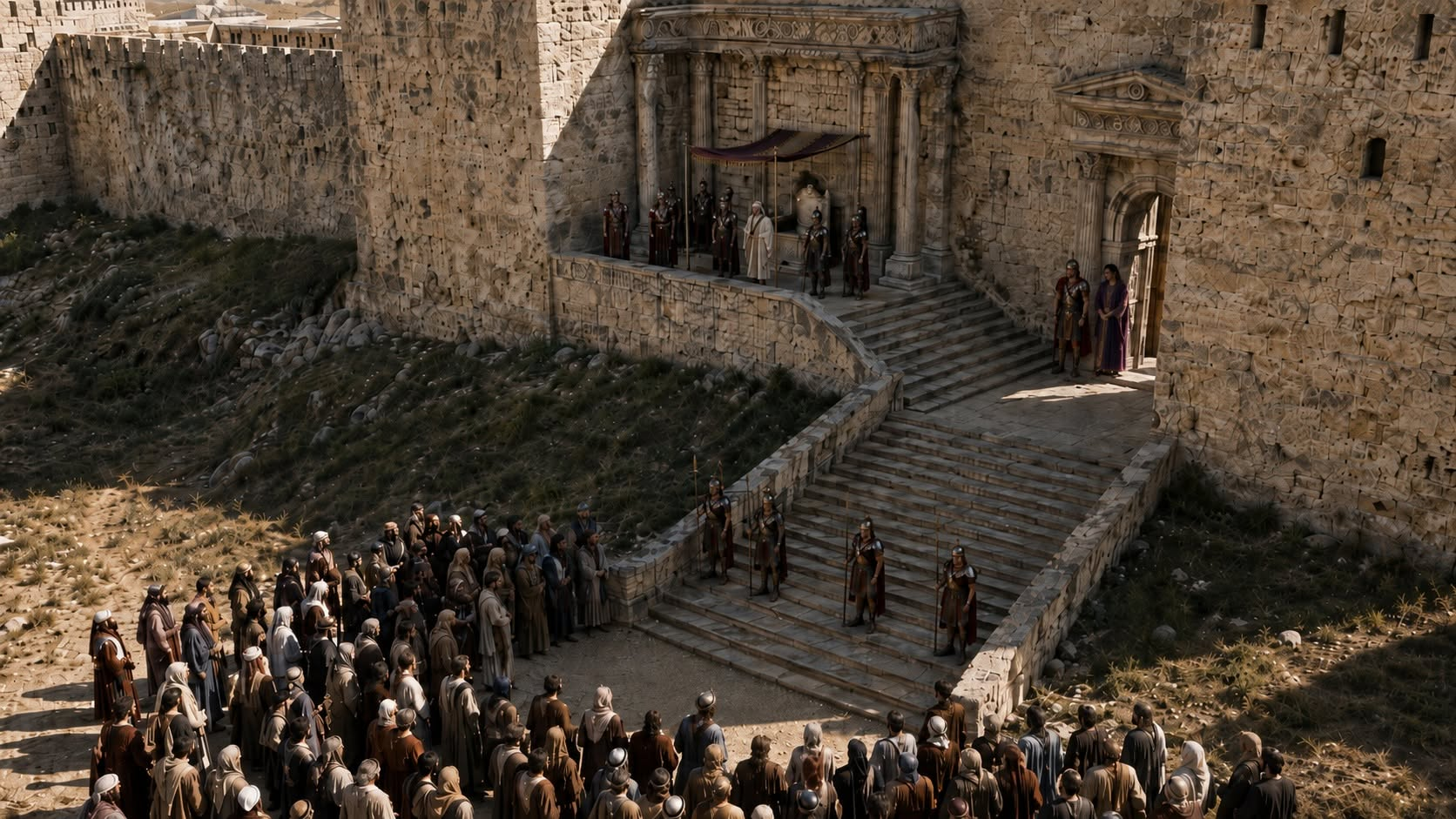
“Praetorium” is a functional term for a governor’s headquarters, not a unique building name. The western palace is a well-supported candidate for Pilate’s Jerusalem base and a plausible setting for Jesus’ hearing, but the Antonia tradition and other possible public venues cannot be excluded by the surviving evidence. The exact tribunal, pavement and route out of the city remain unknown.5617
Herod Antipas appears only in Luke
Luke 23:6–12 adds an episode absent from the other Gospels: Pilate, learning that Jesus was a Galilean, sends him to Herod Antipas, who was in Jerusalem. Herod questions him, receives no answer, and—together with his soldiers—mocks him before sending him back to Pilate. The scene closes with a reported reconciliation between Herod and Pilate. It is a distinctive element of Luke’s narrative and has been studied both as history and as literary-theological storytelling.1
Luke does not identify the building where Antipas stayed, the route between the two authorities, how long the episode lasted, or whether the “white” or “elegant” robe he mentions was a particular royal garment. Scholarship has proposed possible residences and examined the political setting, but any map that draws a definite transfer route is adding detail beyond Luke’s text.7
The episode also cautions against flattening the Gospels into one harmonized itinerary. If Luke’s placement is followed, there is a transfer from Pilate to Herod and back; if another Gospel is being read, that episode is not part of its narrative. A historical reconstruction may discuss Luke’s report, but should identify it as Luke’s and acknowledge that its chronology relative to other scenes cannot be independently checked.
Carrying the cross: text, terminology and route
John 19:17 says Jesus went out carrying the cross. In Matthew 27:32, Mark 15:21 and Luke 23:26, the Roman soldiers compel Simon of Cyrene to carry it. These statements are often harmonized by proposing that Jesus began carrying the wood and Simon took it over. That is a possible reconciliation, not an explicit report of a handover point in any single Gospel. The accounts do not say how far either man carried it or whether “cross” refers to the whole structure or a component.1
The Greek noun stauros has a history of use whose precise meaning depends on period and context. Roman executions employed more than one arrangement. A transverse beam (often called a patibulum in Latin discussions) is a historically plausible reconstruction for some crucifixions, but it should not be silently substituted for the Greek word as though the Gospel specifies its dimensions or construction. A reassessment of non-Christian Greek evidence cautions that the surviving texts do not support every broad claim sometimes made about exactly what condemned people carried.8
The modern Via Dolorosa—with its fourteen stations—is a devotional route that took shape over centuries. The locations and exact path have changed; present-day stations are not a first-century street plan. They can guide prayer and memory while remaining distinct from a historical itinerary.9
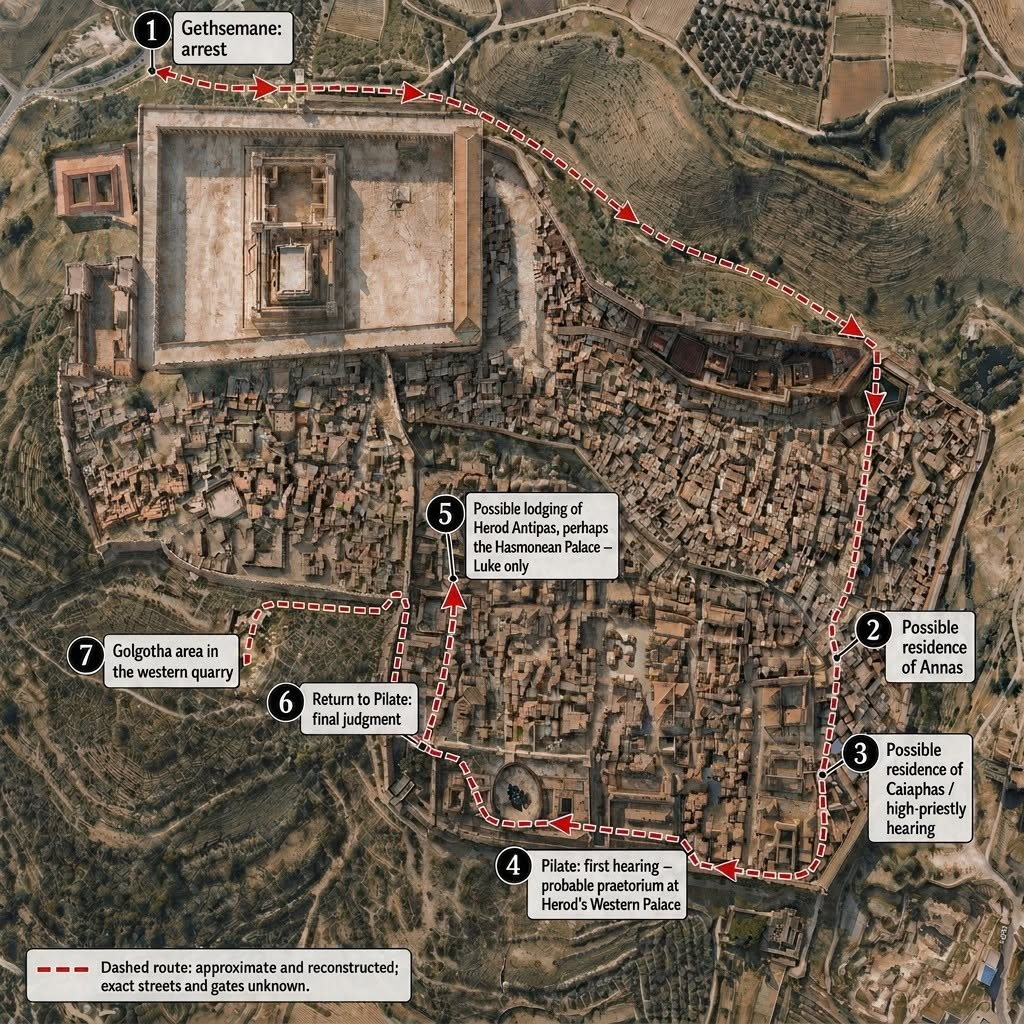
The proposed seven-stop trajectory
- Gethsemane and arrest. John locates the garden across the Kidron; the Synoptics associate it with Gethsemane and the Mount of Olives. The arrest party takes Jesus toward the city. The broad east-to-west movement is clear, while the precise crossing, gate and route are not.1
- Possible hearing before Annas. John says Jesus was taken first to Annas, Caiaphas’s father-in-law. No Gospel or archaeological report identifies Annas’s house. The location shown on the map is a proposed Upper City placement, not a known address.12
- Proceedings associated with Caiaphas. The Synoptics describe proceedings involving the high priest and council; John also names Caiaphas after the Annas episode. The precise sequence, building and relationship between night questioning and the morning council vary by account and remain unresolved. The map’s proposed residence is not an excavated identification.12
- First hearing before Pilate. All four Gospels bring Jesus before Pilate. The western palace is a strong candidate for the governor’s headquarters, but the precise praetorium, audience court and tribunal have not been located. The route map places this proposed stop at Herod’s former western palace.56
- Possible transfer to Herod Antipas. Luke alone reports that Pilate sent Jesus to Antipas and then received him back. Luke names no lodging. The map’s suggestion of a Hasmonean Palace location is one hypothesis, not an identification; neither a route nor the time spent there is known.17
- Return to Pilate for the final decision. Luke explicitly returns Jesus to Pilate; the other Gospels narrate Pilate’s decision without Luke’s Antipas episode. John describes movement between an outside audience and an interior interrogation, but not a recoverable floor plan. The final judgment is placed at the same proposed western-palace headquarters in this reconstruction.12
- Departure toward Golgotha. The Gospels place the execution outside or near the city and differ over who carried the cross. The author’s route paper proposes movement toward the Gennath Gate and a western quarry zone; neither a particular gate nor street sequence is certain. Simon’s transfer point is unknown, and no Gospel describes Jesus falling. The map’s endpoint is a broad execution area, not a pinpoint.1211
Illustrated sequence from arrest to Golgotha
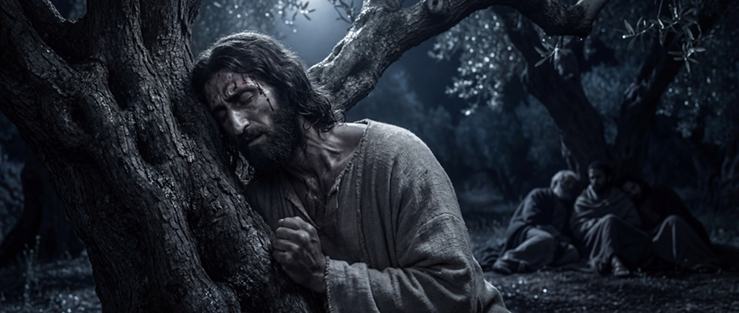
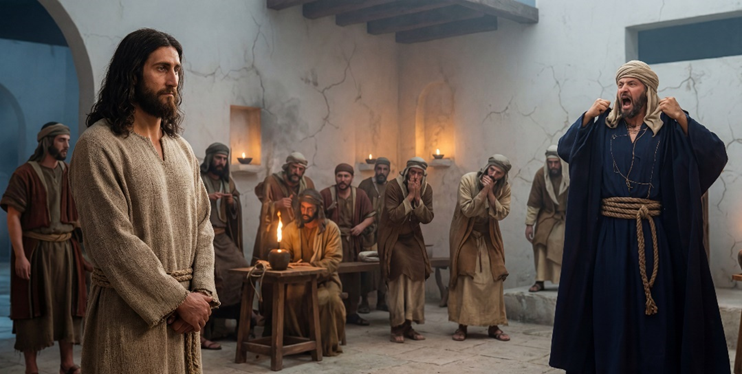
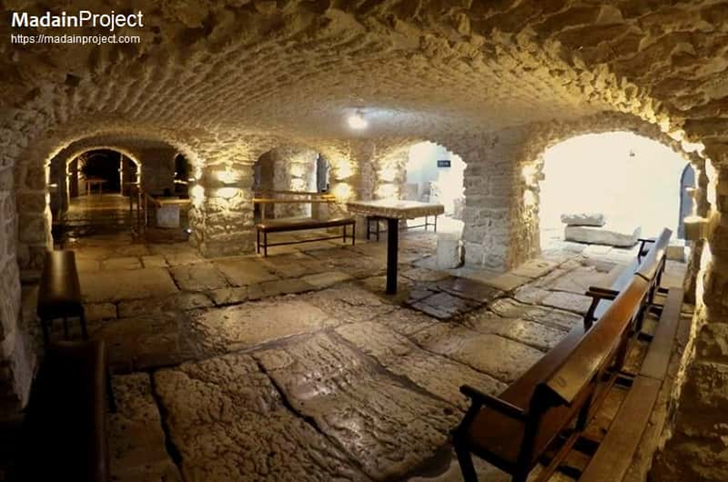
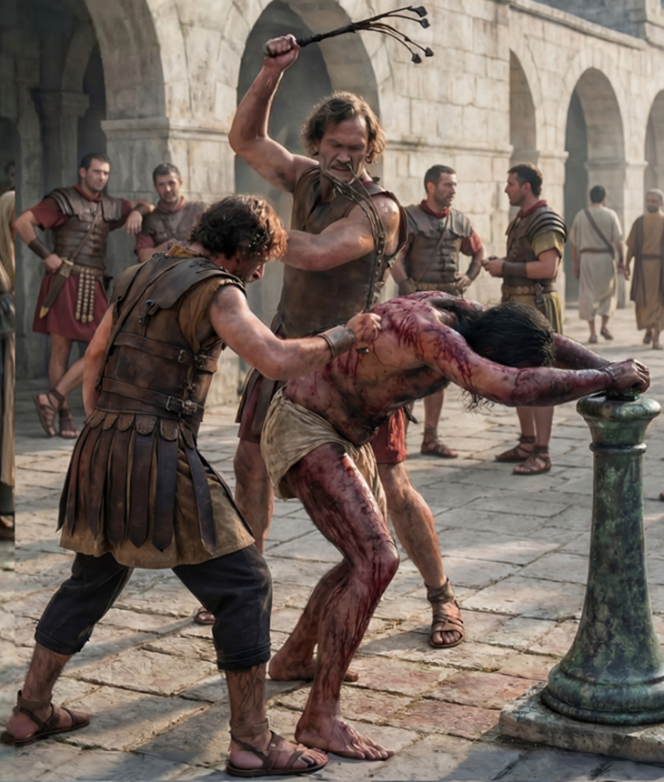
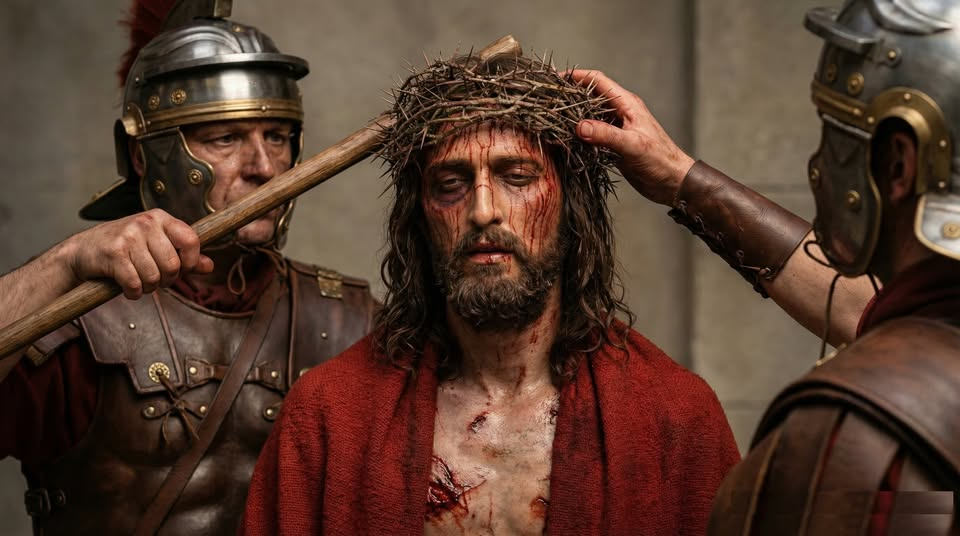
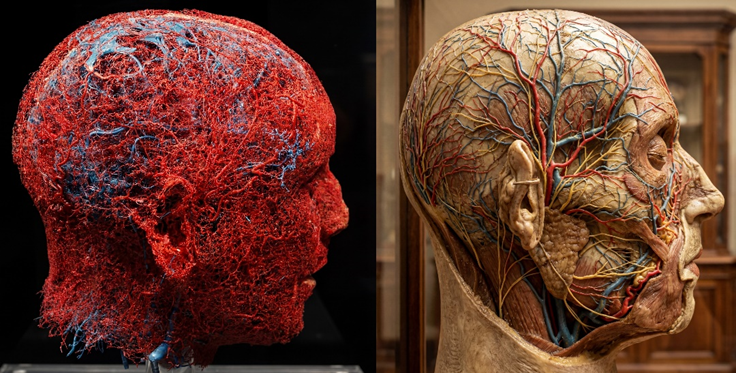
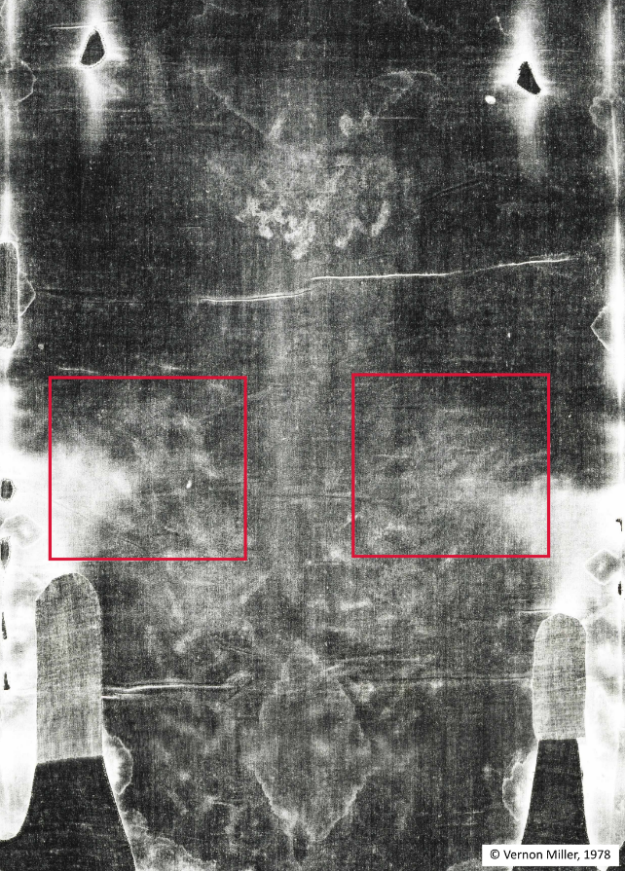
The following sequence reproduces the second edition’s chapter images in event order, followed by a new arrival scene. Dramatic scenes are illustrations, and Shroud mark diagrams show particular interpretations; neither kind of image is independent evidence for the event, a named location or an exact injury chronology.
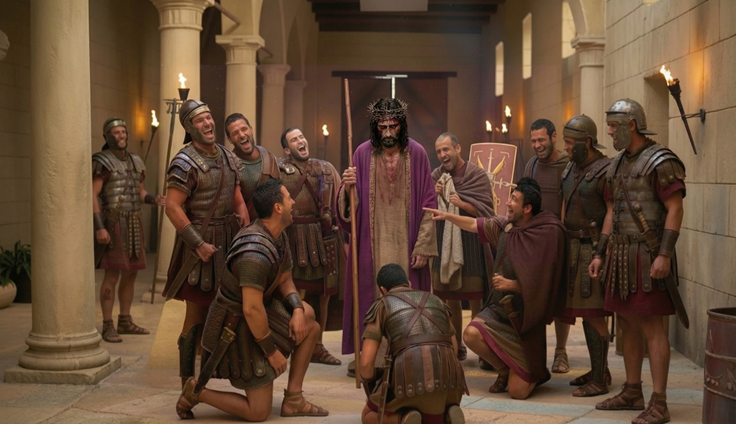
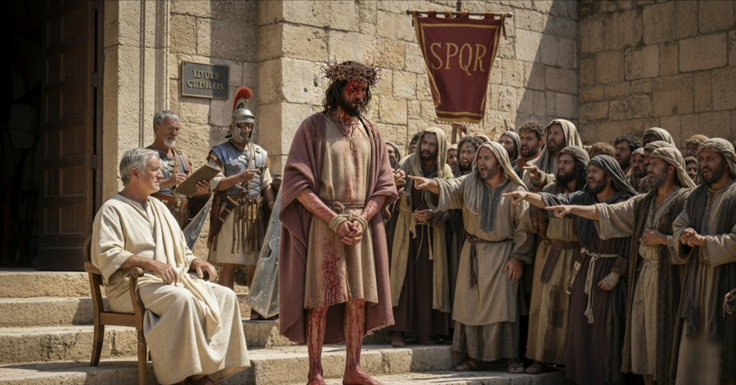
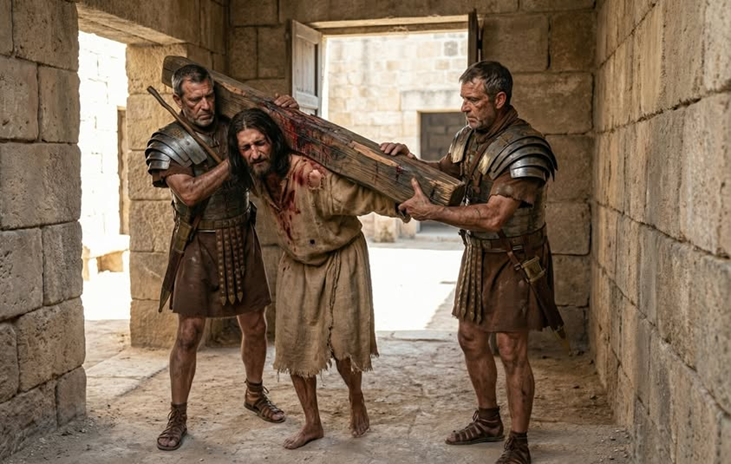
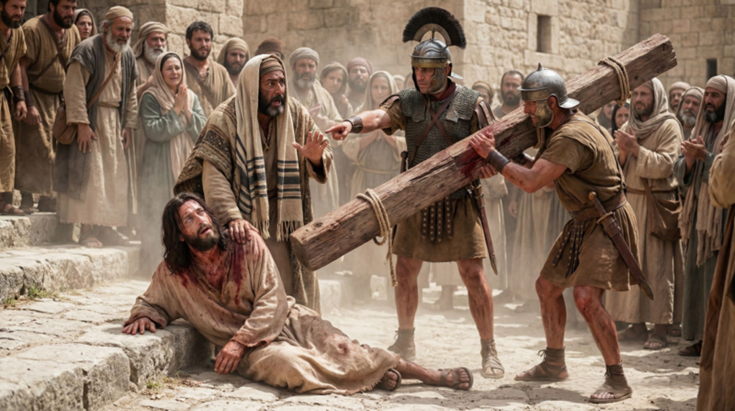
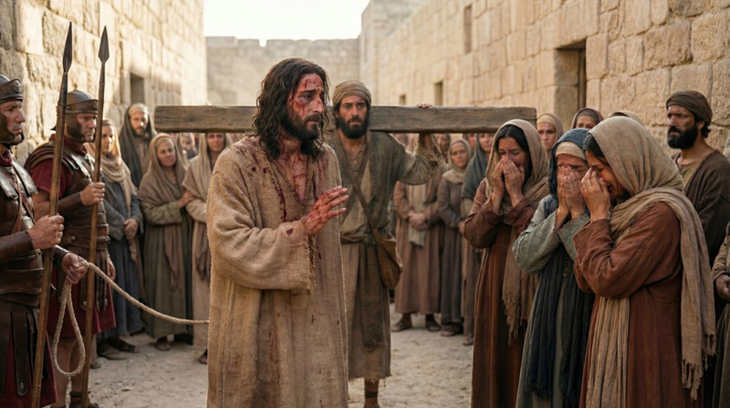
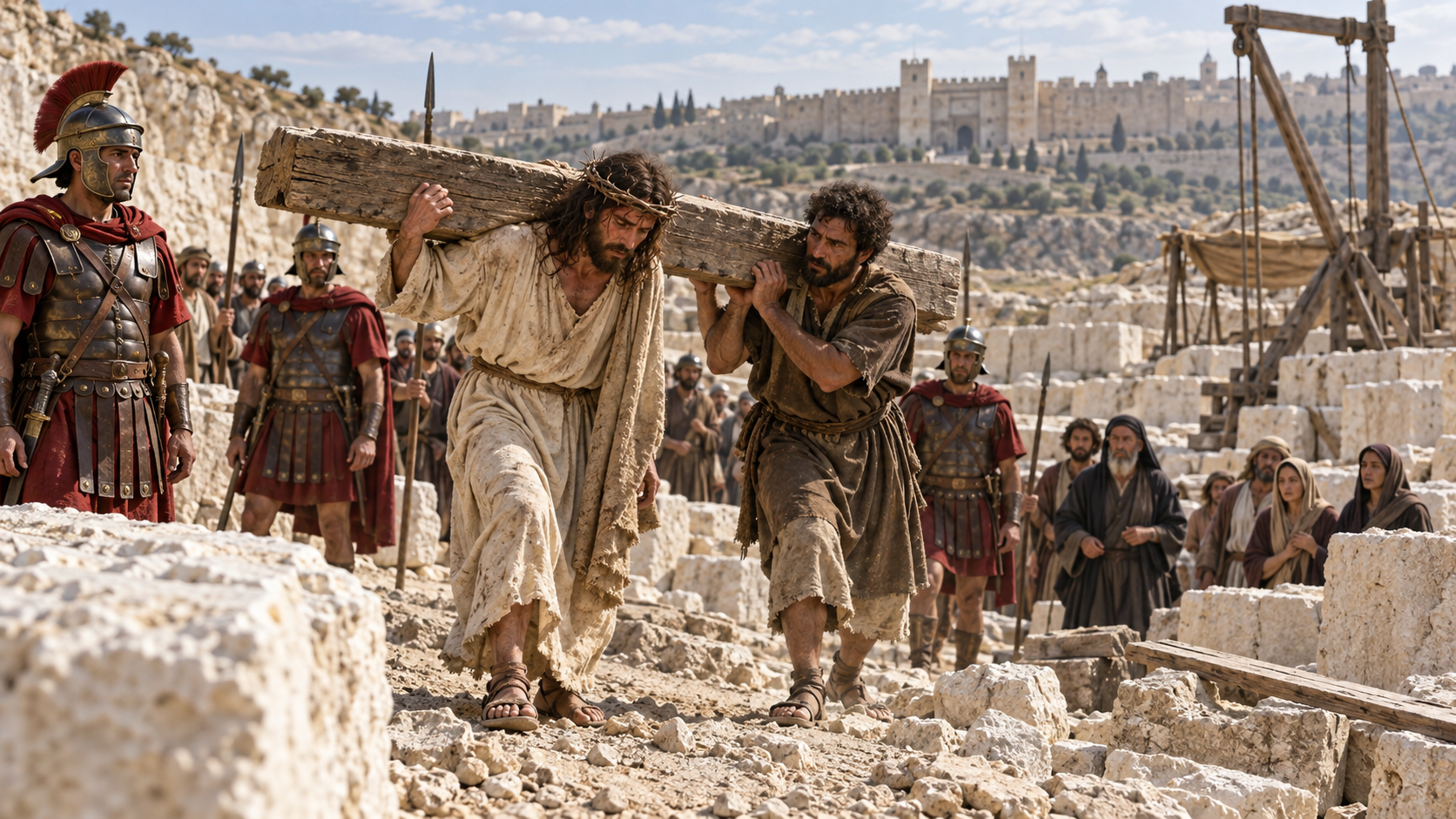
This is the source paper’s cumulative case: Philo places Pilate’s official activity in Herod’s palace; Josephus describes later Roman gubernatorial residence and judicial proceedings at the palace and distinguishes it from Antonia; Mark and Matthew place the soldiers’ mockery in the praetorium; John’s account moves Pilate between an exterior audience and an interior interrogation; and archaeology confirms a large western palace complex. Together, these make the western palace the paper’s preferred praetorium. The evidence for that broad location is stronger than the evidence for any single doorway, tribunal pavement, or precise route.25613
The Antonia route became traditional because the fortress stood beside the Temple and medieval pilgrims identified nearby structures with the praetorium. The route paper argues that the visible Ecce Homo arch and much of the pavement associated with the Lithostrotos belong to Hadrianic Aelia Capitolina, built in the second century—not to Pilate’s first-century tribunal. This weakens those remains as direct proof of the trial’s location, though it does not prove that no judicial activity ever took place at Antonia. On the paper’s reading, the traditional starting point is less likely than the palace, but it remains part of the history of Christian pilgrimage.25
The paper also addresses a proposed departure through a western or southern gate, followed by movement outside the First Wall and a turn north. This route could have avoided crowded streets, but it requires assumptions about usable gates and roads not stated in ancient sources. Its preferred north/northeast movement toward Gennath is simpler in the reconstruction, while still not demonstrable street by street. The paper rejects a route from Antonia through the Golden Gate, then via Damascus Gate or the Old Nablus Road: the Golden Gate lies east of the Temple Mount, away from the likely Golgotha zone, and no ancient account records the long northern detour. Modern gates and roads cannot simply be projected onto Pilate’s Jerusalem.210
The author’s separate Forensic Summary gives a 600–700 metre estimate and detailed time and injury sequence. Those figures are not measurements supplied by the Gospels, Josephus, or a recovered Roman itinerary. They should be presented as the author’s model assumptions, not as established route data. Likewise, later Stations-of-the-Cross falls and named stopping places are devotional tradition, not events recorded in the first-century narratives.14
Consequently, exact claims about a 600–700 metre walk, a forty-five-minute journey, a specific elevation gain, the number of falls, or the precise point where Simon took the beam should be labeled as model assumptions if used at all. Those numbers do not come from a surviving Roman itinerary or a Gospel measurement. Nor do the sources supply the minute-by-minute schedule found in some dramatic reconstructions.
Golgotha: the route’s debated destination
The Gospel accounts identify the execution place as Golgotha, “Place of a Skull,” and place it outside or near the city. They do not identify a particular quarry face, gate, road or tomb entrance. The route proposed here therefore ends in a broad area rather than at a precisely established point.111
The archaeological landscape, quarry phases, city-wall evidence, tombs, cultivation and the author’s three-dimensional model are examined in Chapter 11: “The Quarry at the Edge of the World”. Keeping those questions together there also makes clear that a plausible landscape does not establish the exact path taken by the procession.
What the Shroud can—and cannot—contribute
The Shroud of Turin is often brought into reconstructions of the Passion because its image has been interpreted as showing marks associated with scourging, head injury, crucifixion and blood flow. Those interpretations are discussed in other chapters, where the image and the relevant studies can be examined directly. Here, the key historical limit is simple: a textile image has no place names, road directions or timestamp. It cannot independently identify Gethsemane, Pilate’s residence, Simon’s transfer point, a gate or Golgotha.
Even when a mark is interpreted as consistent with a particular kind of wound, moving from “this mark could fit a proposed injury” to “this injury occurred at this named episode, at this location, in this order” requires evidence the cloth does not supply. The distinction is especially important when the Shroud’s date and image formation remain disputed. The 1988 radiocarbon study reported a medieval range; challenges and alternative interpretations have been published, but no later test has replaced that result with a broadly accepted first-century date.12
The author’s books and papers bring together proposed forensic readings and illustrative reconstructions. They are useful as the author’s synthesis and as leads to references, but their proposed exact chronology, medical diagnoses, measurements and wound-to-Gospel identifications are not independent historical records. This revised chapter retains the questions they raise while distinguishing observation, inference and devotional interpretation. It does not present a specific “forensic path” as established biology.
What can be said with different levels of confidence?
| Statement | Assessment |
|---|---|
| The Gospel tradition places Jesus’ arrest at a garden east of Jerusalem, followed by hearings, Pilate’s decision, and execution outside the city. | Explicit in the broad narrative, though details and order vary among the four accounts. |
| Pilate used Herod’s former palace for official business in Jerusalem. | Historically plausible and supported by evidence for the palace’s official use; it does not prove that Jesus was tried there. |
| The Antonia Fortress or the former western palace was the precise praetorium. | Debated. Both proposals have been argued; the Gospel texts do not identify the building. |
| Jesus and Simon shared the carrying of a crossbeam on a named route through a particular gate. | Possible harmonization and route hypothesis; no Gospel records the transfer point, gate or exact route. |
| The modern Via Dolorosa reproduces the first-century route. | Not demonstrated. It is a devotional route with a later history. |
| The Shroud records each stage of the journey and fixes its location or timing. | Not established. The cloth cannot itself encode geographic coordinates or a historical itinerary. |
The soundest reconstruction is deliberately modest. The Gospel accounts give a narrated sequence and a few broad geographic anchors. Josephus, Philo and archaeological studies illuminate Jerusalem’s political and physical setting. Those materials can make certain proposals more plausible than others, but the surviving evidence does not yield a complete route, exact timings, or a uniquely identified praetorium and execution point.
References
- The four canonical Gospels: Matthew 26–27; Mark 14–15; Luke 22–23; John 18–19. Read the Passion narratives (NRSVUE).
- Grasso, Otangelo. “From the Praetorium to Golgotha: Reconstructing the Route.” Author’s research essay, July 2026. Download the author’s paper (PDF). A proposed reconstruction; the paper notes that no source records a precise itinerary.
- United States Conference of Catholic Bishops. Luke 22, textual notes on Luke 22:43–44. Read the chapter and notes.
- Bucklin, Robert. “The Legal and Medical Aspects of the Trial and Death of Christ.” Shroud Spectrum International 1, no. 4 (1982): 4–15. A forensic interpretation in Shroud literature; not an independent medical examination of a known historical patient.
- Benoit, Pierre. “L’Antonia d’Hérode le Grand et le forum oriental d’Aelia Capitolina.” Harvard Theological Review 64, nos. 2–3 (1971): 135–167. Publication record. See also Gibson, Shimon. “The Trial of Jesus at the Jerusalem Praetorium: New Archaeological Evidence,” in The World of Jesus and the Early Church (2011), 97–118.
- Philo, Embassy to Gaius 299–305, on Pilate’s gilded shields at Herod’s palace; Josephus, Jewish War 2.301, 2.328–329 and 5.176–183, on Jerusalem’s palace and Antonia. Philo text · Josephus, War 2.328 · Josephus, War 5.
- Kubiś, Adam. “Jesus’ Trial before Herod Antipas.” Verbum Vitae / Biblical Annals scholarship on Luke 23:6–12 (2015). Read the study (PDF).
- van Wingerden, Ruben. “Carrying a σταυρός: A Re-Assessment of the Non-Christian Greek Sources.” New Testament Studies 67, no. 3 (2021): 336–355. Read the publication record.
- Terra Sancta Museum. “The Fourteen Stations of the Sorrowful Way.” Background on the development and movement of the devotional stations. Read the overview.
- Christensen, Calan. “Retracing the Historical Via Dolorosa: A Logistical Exercise in First-Century Jerusalem.” Studia Antiqua 22, no. 1 (2023). Read article and download PDF.
- Taylor, Joan E. “Golgotha: A Reconsideration of the Evidence for the Sites of Jesus’ Crucifixion and Burial.” New Testament Studies 44, no. 2 (1998): 180–203. Read the article record. For archaeological context, see Gibson, Shimon, and Joan E. Taylor, Beneath the Church of the Holy Sepulchre, Jerusalem.
- Damon, P. E., et al. “Radiocarbon Dating of the Shroud of Turin.” Nature 337 (1989): 611–615. Read the original report.
- Peleg-Barkat, Orit. “Herod’s Western Palace in Jerusalem: Some New Insights.” Electrum 26 (2019): 53–72. Read the article record.
- Grasso, Otangelo. Forensic Summary, 3rd ed. Author’s book; used here as a source of the author’s proposed reconstruction and references, not as independent confirmation of the itinerary. Find the book.
- Grasso, Otangelo. From Forensics to Faith (2026). Author’s broader historical and devotional synthesis; interpretations are distinguished from primary evidence in this article. Find the book.
- Szanton, Nahshon. “The Stepped Podium: A Landmark on Jerusalem’s Main Thoroughfare in the Second Temple Period.” ‘Atiqot 120 (2026). The article discusses a possible public function for a podium beside the Stepped Street; it does not identify it as the site of Jesus’ trial. Read the Israel Antiquities Authority publication.
- Tower of David Jerusalem Museum. “Herod’s Palace and the Kishle.” Museum information on the archaeological remains and visitor access. View the museum page.
The downloadable route essay advances a possible reconstruction and includes its own bibliography. Its proposed route should be weighed against the alternative models cited above.