AQUIFEX AEOLICUS VF5 · ORGANISM-SPECIFIC DESCRIPTION
How this system works in Aquifex
In this hydrogen-oxidizing chemolithoautotroph, energy metabolism supplies reducing equivalents and ATP while carbon assimilation supplies biomass precursors. The rTCA network links oxaloacetate, succinyl-CoA, 2-oxoglutarate and acetyl-CoA-related chemistry to amino-acid, lipid, nucleotide and cofactor synthesis. Folate-linked one-carbon reactions connect glycine and serine metabolism to other biosynthetic demands. The published carbon-fixation diagram distinguishes the proposed incomplete reductive acetyl-CoA branch from a complete Wood–Ljungdahl pathway; its grey crossed-out step must not be read as an operating VF5 reaction.
44 proteins are assigned to this function in the 912-protein working reconstruction (Carbon fixation and precursor metabolism).
The working reconstruction retains 912 proteins; 338 additional proteins remain undetermined. These are model selections, not a demonstrated viable minimum or individual VF5 knockout results. The 16 atlas hotspots and the reconstruction categories use different partitions.
Inspect the 912-protein inventory and model evidence →REFERENCE ORGANISM · AQUIFEX AEOLICUS VF5
Aquifex metabolic network
756 reaction entries · Published metabolic reconstruction
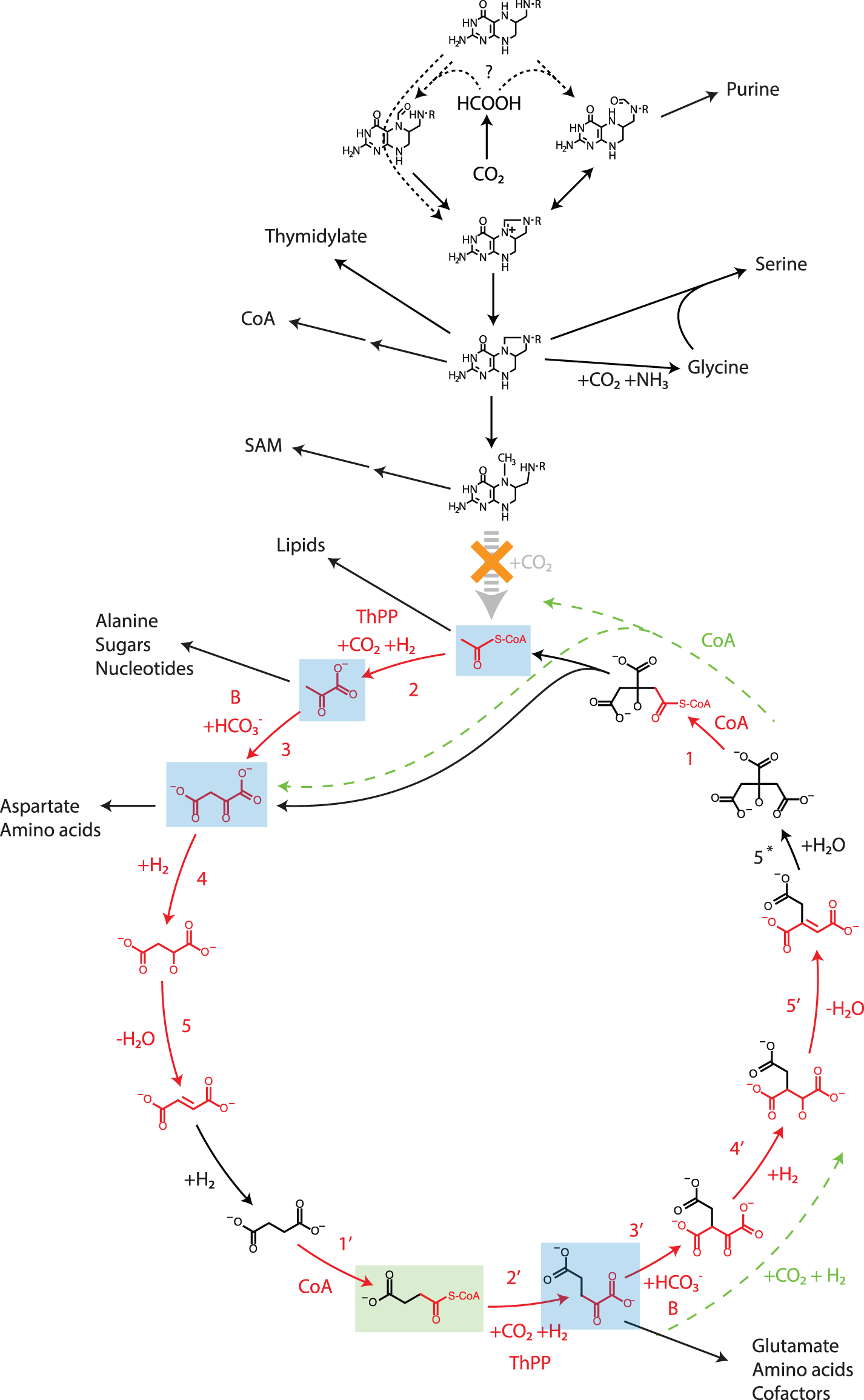 Open the full diagram and component evidence ↗
Published rTCA and folate-linked carbon-fixation diagram. Click to explore the source figure, genome-annotated components and complete metabolic network.
Braakman & Smith (2014), Figure 2, unmodified, CC BY. The figure marks uncertain steps and comparative alternatives. Sources: Deckert et al. (1998), complete VF5 genome · Braakman & Smith (2014), metabolic reconstruction · NCBI reference genome.
Principal carbon fixation is rTCA. The published figure also marks uncertainties and reactions used in other lineages; it does not establish a complete Wood–Ljungdahl pathway in VF5.
Explore the complete 756-reaction metabolic network ↗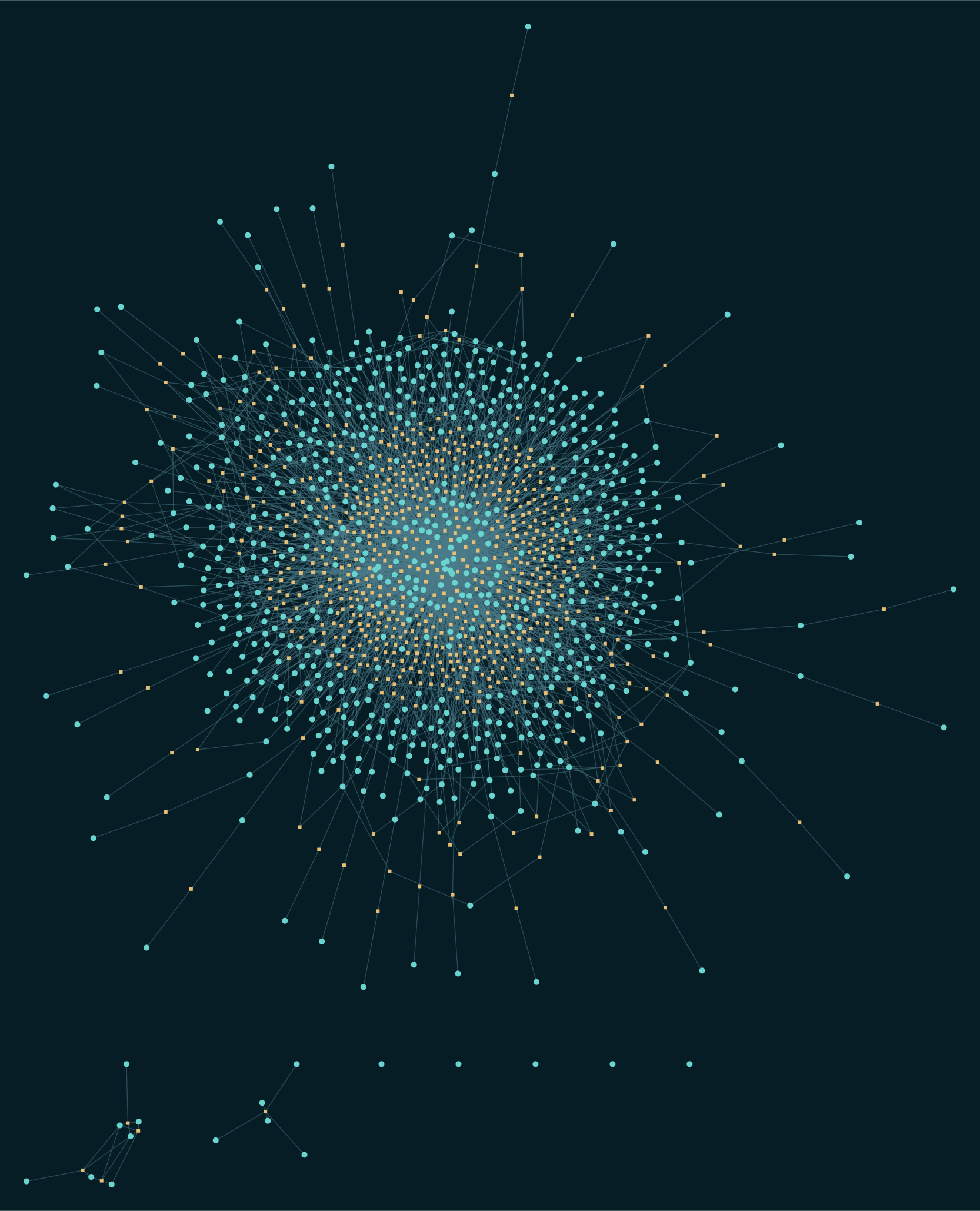
Source model: Braakman & Smith (2014), original supplementary SBML, CC BY. This is a qualitative reconstruction, not a demonstrated minimum or a flux measurement.
FUNCTION AND MECHANISM
How this system works
FOLLOW THE FLOW
Carbon supply to cellular building blocks
Carbon comes in → it is turned into a few standard building blocks → those are shared out to the systems that build the rest of the cell
Central Carbon Metabolism
Making the carbon building blocks of life
Air is one source of carbon. Cells can also obtain carbon in ready-made food molecules.
Carbon dioxide in the air
CO₂ is a gas in the atmosphere. It dissolves in water; some becomes bicarbonate (HCO₃⁻), another dissolved form of carbon. CO₂ can also enter water from respiration or geological sources.
Carbon in food molecules
Sugars, organic acids and other carbon-containing molecules are already present in the surroundings.
Capture dissolved CO₂
Carbon-fixing cells use enzymes and energy to turn inorganic carbon into organic molecules. The model offers the Wood–Ljungdahl pathway OR the reverse Krebs cycle.
Take up organic molecules
Cells that feed on organic carbon bring suitable molecules through membrane transport proteins, then process them. They may not fix CO₂ at all.
Make a shared supply of starting materials
Enzyme reactions supply small carbon molecules such as acetyl-CoA, pyruvate and sugar phosphates. Different entry routes feed different parts of this connected network.
Amino acids → proteins
System 06 makes the building blocks used to build proteins.
Nucleotides → DNA and RNA
System 05 makes the units used to build genetic material.
Lipids → cell membrane
System 07 makes much of the material in the cell boundary.
Cofactors → enzyme helpers
System 02 supplies small chemical helpers for many reactions.
Read from top to bottom. Side-by-side panels show branches or supplies that come together; their labels explain the relationship. Detailed mechanisms and sources follow below.
LOOK DEEPER · CENTRAL CARBON METABOLISM
A detailed metabolic network
Follow individual carbon compounds through enzyme-catalyzed reactions, then into the branches that supply the rest of the cell. Start at the air-to-water carbon supply at the top. Wood–Ljungdahl and rTCA are shown as alternative fixation routes.
Open the large, zoomable network ↗ · Open the full-resolution diagram ↗
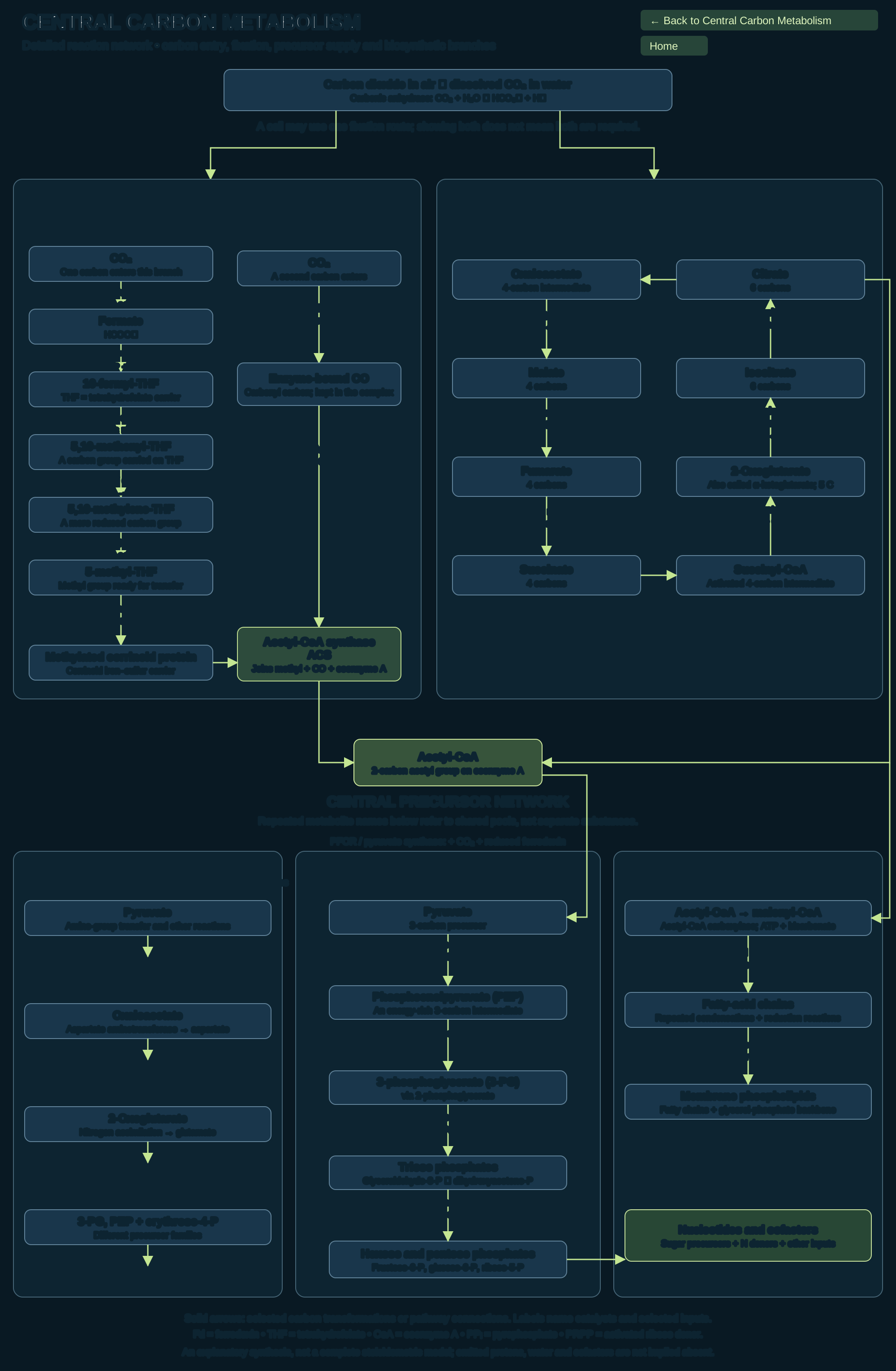
Book basis: Otangelo Grasso, X-ray of Life, Volume III, pp. 498 and 536–550: central carbon entry, CODH/ACS, the Wood–Ljungdahl pathway, rTCA, and their links to biosynthetic systems. The reaction-level expansion shows representative documented pathways; it is not a claim that the book’s nine listed entries constitute the whole network. The THF-dependent Wood–Ljungdahl branch is a bacterial example; archaeal carriers and reactions differ.
Reaction sources and how to read the network
Metabolite boxes name substances. Arrow labels name enzymes and selected energy or electron inputs. Repeated names represent the same metabolite pool. Additional biosynthetic reactions connect precursor pools to the products named in the branch panels. ATP supports reactions; carbon fixation is not itself a universal ATP-generating step.
- The Autotrophic Core (2021): reconstructed network of 404 reactions.
- Experimental evidence for reductive TCA carbon fixation and its key enzyme activities (2005).
- Functional expression of acetyl-CoA synthase and Wood–Ljungdahl pathway context (2018).
- Experimental methyl transfer from methyl-THF to the corrinoid iron–sulfur protein (1999).
Starting inputs: A carbon source (CO₂ or ready-made organic molecules), a supply of electrons and energy, working enzymes, and recycled helper molecules (cofactors).
- Bring carbon in: A cell gets its carbon in one of two ways. Cells that make their own food (autotrophs) use CO₂ dissolved in water, partly present as bicarbonate; the enzyme carbonic anhydrase speeds up the switch between the two forms. Cells that feed on others (heterotrophs) import ready-made organic molecules through membrane transporters (System 11).
- Fix the CO₂, using one route: “Fixing” means attaching carbon from CO₂ to other molecules so that it becomes part of living material. The book’s model names two possible routes: the Wood–Ljungdahl pathway, which builds acetyl-CoA from two CO₂ molecules, and the reverse Krebs cycle (rTCA), which runs the familiar Krebs cycle backwards so that it captures CO₂ instead of releasing it. They are alternatives, not two stages of one pathway.
- Make the carbon hub: Every way in ends in the same small set of central molecules: acetyl-CoA, pyruvate, oxaloacetate, 2-oxoglutarate and sugar phosphates. The most important is acetyl-CoA: a two-carbon unit attached to the carrier molecule coenzyme A (CoA). In the Wood–Ljungdahl route, the CODH/ACS enzyme makes acetyl-CoA by joining a methyl group (one branch) with carbon monoxide made from CO₂ (the other branch).
- Share the building blocks out: From the hub, carbon flows down several branches at the same time: toward amino acids (mainly from pyruvate, oxaloacetate and 2-oxoglutarate), nucleotides (their ribose sugar comes from sugar phosphates), membrane lipids (fatty chains from acetyl-CoA), and cofactors.
- Keep it running: These reactions need energy (ATP) and electrons (System 03). They also depend on helpers such as CoA and metal-containing enzyme centers (Systems 02 and 16), which must be recycled or rebuilt. A cyclic route like rTCA must also regenerate its own starting molecule, and the cell adjusts reaction speeds to demand.
Usable outputs: Carbon building blocks for Cofactors (System 02), Nucleotides (System 05), Amino acids (System 06), and Lipids & membrane (System 07).
This is a branching network, not a single line. Fixing CO₂ is one way to obtain carbon: a cell does not need both named routes, and a cell that feeds on organic molecules may not fix CO₂ at all.
Evidence for selected mechanisms
A reconstructed autotrophic biosynthetic network
These papers examine the named mechanisms or networks. The numbered order is an explanatory overview; it is not an experimentally established history of cellular origins.
Turning a carbon source into cellular material
An autotrophic cell obtains much of its carbon from carbon dioxide; a heterotrophic cell imports organic carbon. This hypothetical model explores carbon-fixing options. Carbon dioxide must be reduced and incorporated into molecules that other enzymes can use. That requires a supply of electrons, appropriate catalysts, and reactions whose combined energy balance permits sustained turnover.
Two possible carbon-fixing routes
In the Wood–Ljungdahl pathway, separate branches process two carbon dioxide molecules: one provides a methyl group and another supplies carbon monoxide. Carbon monoxide dehydrogenase/acetyl-CoA synthase, abbreviated CODH/ACS, brings carbon units together with coenzyme A to form acetyl-CoA. The reductive tricarboxylic acid cycle, or rTCA cycle, uses a different reaction network to incorporate carbon dioxide into organic intermediates. These are distinct metabolic options; a short list of shared or distinctive enzymes is not a complete reconstruction of either pathway.
Distributing the products
Acetyl-CoA carries an acetyl group that can enter lipid synthesis and other reactions. Other carbon intermediates provide starting materials for amino acids and sugars. Carbonic anhydrase accelerates the reversible conversion between dissolved carbon dioxide and bicarbonate. It helps make the appropriate inorganic carbon form available; it does not by itself fix carbon into organic matter.
Keeping carbon, electrons, and energy coordinated
A carbon pathway can stop when one required cofactor is missing even if the other enzymes are present. CODH/ACS depends on metal centers, while one-carbon chemistry depends on molecular carriers. The cell must regenerate those carriers and supply reducing power. The useful output is a continuing flow of carbon into biomass, not simply the presence of a detectable product.
A closer look at the evidence
A reconstructed biosynthetic network connects carbon assimilation with amino acid, nucleotide, and cofactor production. This provides a systems view of shared chemical inputs; a reconstruction is not an experimental demonstration of the first cell.1
Follow the consequence
If acetyl-CoA becomes scarce, membrane synthesis can slow. A membrane that cannot grow then limits cell growth and division, even when the DNA and ribosomes remain functional.
Component families in this system (4)
- Carbon Monoxide Dehydrogenase/Acetyl-CoA Synthase (CODH/ACS)
- rTCA cycle (excluding standard TCA cycle enzymes)
- Wood-Ljungdahl pathway
- Carbonic anhydrase
FUNCTIONALLY INTEGRATED
What it depends on, and why
A functional dependency means that one process supplies material, energy, machinery, or suitable conditions to another. It does not necessarily mean that two proteins physically touch.
| Other system | Relationship | Why the connection matters |
|---|---|---|
| 03 · Energy production | Provides to this system | ATP and reducing equivalents support energy-requiring carbon assimilation and precursor production. The exact coupling depends on the chosen fixation pathway. |
| 02 · Cofactors | Provides to this system | CoA and one-carbon cofactors enable carbon transfer and acetyl-CoA metabolism in the proposed network. |
| 16 · Metal clusters | Provides to this system | CODH/ACS and other selected carbon-metabolism enzymes require correctly assembled metal centers. |
| 02 · Cofactors | Receives from this system | Carbon intermediates supply the molecular skeletons used to synthesize cofactors. |
| 05 · Nucleotides | Receives from this system | Carbon precursors supply the ribose and ring-building substrates needed for nucleotide synthesis. |
| 06 · Amino acids | Receives from this system | Central metabolism provides carbon skeletons for amino acid biosynthesis. |
| 07 · Lipids & membrane | Receives from this system | Acetyl-CoA and other carbon intermediates feed fatty acid and membrane lipid synthesis. |
REASON & SCIENCE LIBRARY · ORGANIZING QUESTIONS
Library basis for this article
The library separates carbon availability from a self-sustaining metabolic supply system. Its discussion of autotrophy motivates the question of how carbon assimilation, reductants and catalyst production could become coupled. For this atlas, the relevant concrete case is the Aquifex reconstruction; it must not be replaced with a generic photosynthetic pathway or an assumption that an early cell already possessed every modern enzyme.L
FUNCTIONAL ORGANIZATION · AUTHOR’S FRAMEWORK
Hallmarks of design
Carbon metabolism illustrates the following organizational features in the supplied papers. These descriptions identify biological functions; interpreting their origin as design is the author’s comparative argument.H1, H2
Carbon fixation and precursor reactions supply amino-acid, lipid, nucleotide and cofactor pathways.
Carbon-transfer and redox reactions require compatible cofactors and regeneration.
Assimilation depends on usable energy, reducing equivalents and mineral resources.
Origin hurdles and abductive assessment · Assessment method · All 40 hallmarks. Biological evidence: the mechanism, accession records and scientific references on this page.
SOURCE-BASED SYNTHESIS
The origin problem in brief
How could carbon fixation, catalyst supply, and usable energy become a self-sustaining network?
- Establish a continuing supply of usable carbon building blocks.
- Connect carbon reactions to usable energy, catalysts, and their cofactors.
- Keep the network supplied and balanced as its products feed other pathways.
Source notes and how the count is used
57 book-listed challenges. Shared metabolism/cofactor category.
Numbers reproduce the source’s reported section totals. They are not a new count of unique questions or an independent assessment of which issues remain scientifically unresolved. Overlapping lists are not added together.
Source passages: X-ray of Life, Volume I, §11.1, pp. 410–411; X-ray of Life, Volume II, §14.2, pp. 753–754; X-ray of Life, Volume III, §15.3, pp. 546–559; The Cell: An Unsolved Mystery, Chapter 8, pp. 158–173.
The overview follows the cell-specific scope of Forty Hallmarks of Design in the Cell: later eukaryotic machinery, specialized immune systems, and model-specific numerical probabilities are not treated as universal first-cell requirements.
ORIGINS
What needs to be explained
An origins explanation must connect available chemistry to a system that can persist, reproduce useful functions, and pass them to descendants. Explaining how a modern system works and explaining how its predecessors arose are different tasks. Simpler catalysts, environmental assistance, and alternative chemistries must be evaluated rather than assuming that the complete modern machinery appeared at once.
Scope of the question
The modern pathways show what selected cells do today. They do not establish that the first living system used both routes, or required every modern enzyme at its beginning.
Major hurdles to investigate
These are requirements to test in proposed scenarios. Their importance depends on the environment and on which intermediate system is proposed.
Carbon supply
Concentrate a usable carbon source and maintain its delivery without relying on modern transport proteins.
Catalysis and selectivity
Promote productive reactions faster than competing reactions, with catalysts that are available and stable in the same setting.
Energy coupling
Connect an energy source to carbon assimilation rather than assuming that favorable individual reactions automatically form a working pathway.
Network closure
Regenerate carriers and intermediates so that a reaction sequence can continue instead of consuming a finite starting stock.
Integration
Supply carbon products at compatible rates to a compartment with hereditary chemistry and an emerging capacity to replace catalysts.
EXPERIMENTAL PROGRESS
What has been demonstrated, and what it leaves open
Mineral-catalyzed experiments have produced small organic molecules from hydrogen and carbon dioxide. This supports particular chemical steps related to carbon metabolism under the tested conditions; it does not demonstrate a self-maintaining cellular carbon network.2
Condensed origin challenges
- Establish a continuing supply of usable carbon building blocks.
- Connect carbon reactions to usable energy, catalysts, and their cofactors.
- Keep the network supplied and balanced as its products feed other pathways.
Three condensed themes from the source passages above; they are not the complete numbered catalogue.
The integration test
Experiments that connect precursor chemistry across molecular classes help test compatibility.3 A strong next test for this system would combine its relevant chemical steps with continued material supply, energy use, retention, and reproduction under an explicitly specified environmental sequence. The open questions above are research questions, not claims that every intermediate is impossible.
Engineered minimal cells help reveal present cellular dependencies, but their construction starts from existing biological machinery and growth conditions. They therefore answer a different question from a prebiotic synthesis experiment.4
Explore prebiotic synthesis challengesTERMS IN PLAIN LANGUAGE
Glossary
- carbon fixation
- Attaching carbon from CO₂ to other molecules so that it becomes part of living material. Plants do this in photosynthesis; many microbes do it without light.
- CO₂ and bicarbonate
- Carbon dioxide dissolves in water, and part of it turns into bicarbonate (HCO₃⁻). Different enzymes use one form or the other.
- autotroph / heterotroph
- An autotroph makes its own organic molecules from CO₂. A heterotroph has to take in organic molecules made by other organisms.
- organic molecule
- A carbon-based molecule of the kind living things are built from, such as sugars, amino acids, and fats.
- metabolite
- Any small molecule that is made or used in the cell’s chemical reactions.
- central metabolites
- The small set of hub molecules, such as acetyl-CoA and pyruvate, from which most other building blocks are made.
- precursor
- A starting molecule that later reactions turn into something else.
- acetyl-CoA
- A two-carbon unit (acetyl) attached to coenzyme A. It is the main carbon hub of this system and the starting point for fats and many other molecules.
- coenzyme A (CoA)
- A helper molecule that carries small carbon groups, such as acetyl, from one enzyme to another. It is made by System 02.
- Wood–Ljungdahl pathway
- A CO₂-fixing route that builds acetyl-CoA from two CO₂ molecules, using electrons from hydrogen or another donor. It occurs in some bacteria and archaea.
- reverse Krebs cycle (rTCA)
- The Krebs (citric acid) cycle running backwards, so that it captures CO₂ instead of releasing it. It occurs in some bacteria.
- CODH/ACS
- Carbon monoxide dehydrogenase / acetyl-CoA synthase: a metal-containing enzyme pair at the heart of the Wood–Ljungdahl pathway. It turns CO₂ into carbon monoxide, then joins it with a methyl group and CoA to make acetyl-CoA.
- carbonic anhydrase
- An enzyme that speeds up the conversion between CO₂ and bicarbonate.
- electron donor
- A substance, such as hydrogen gas, that gives up electrons. Fixing CO₂ needs electrons as well as energy.
- reducing equivalents
- Electrons held by carrier molecules such as NADH or ferredoxin, ready for reactions that need them.
- enzyme
- A molecule, usually a protein, that speeds up a chemical reaction without being consumed by it.
- cofactor
- A non-protein chemical helper required by some enzymes, such as an organic molecule or metal ion.
Related library threads
Carbon metabolism is the most basic aspect of life. · Metabolic Pathways, and the Origin of Life · Origin of life: heterotrophic or autotrophic , the emergence of the Basic Metabolic Processes · Major metabolic pathways and their inadequacy for origin of life proposals
The author’s library essays and research compilations provide context and arguments. Biological mechanisms should be assessed through the scientific references; the design inference is a separate, revisable assessment.
SCIENTIFIC LITERATURE
Scientific papers
Linked superscript numbers in the text lead to the papers below, numbered in order of first citation on this page. Each entry links to the publisher and bibliographic record; open full text is included where available. These studies support the specified mechanisms or experiments, not every possible origin scenario.
Wimmer JLE, Vieira ADN, Xavier JC, Kleinermanns K, Martin WF, Preiner M. (2021). The Autotrophic Core: An Ancient Network of 404 Reactions Converts H2, CO2, and NH3 into Amino Acids, Bases, and Cofactors. Microorganisms, 9, 458.
Preiner M, Igarashi K, Muchowska KB, Yu M, Varma SJ, Kleinermanns K, Nobu MK, Kamagata Y, Tüysüz H, Moran J, Martin WF. (2020). A hydrogen-dependent geochemical analogue of primordial carbon and energy metabolism. Nat Ecol Evol, 4, 534-542.
Patel BH, Percivalle C, Ritson DJ, Duffy CD, Sutherland JD. (2015). Common origins of RNA, protein and lipid precursors in a cyanosulfidic protometabolism. Nat Chem, 7, 301-307.
Hutchison CA, Chuang RY, Noskov VN, Assad-Garcia N, Deerinck TJ, Ellisman MH, Gill J, Kannan K, Karas BJ, Ma L, Pelletier JF, Qi ZQ, Richter RA, Strychalski EA, Sun L, Suzuki Y, Tsvetanova B, Wise KS, Smith HO, Glass JI, Merryman C, Gibson DG, Venter JC. (2016). Design and synthesis of a minimal bacterial genome. Science, 351, aad6253.
Further scientific reading
4 additional papers. Each title links to its article or bibliographic record.
Search and filter this system’s reference list →